Theresa Ng’ambi: Earth, memory and ancestral melodies
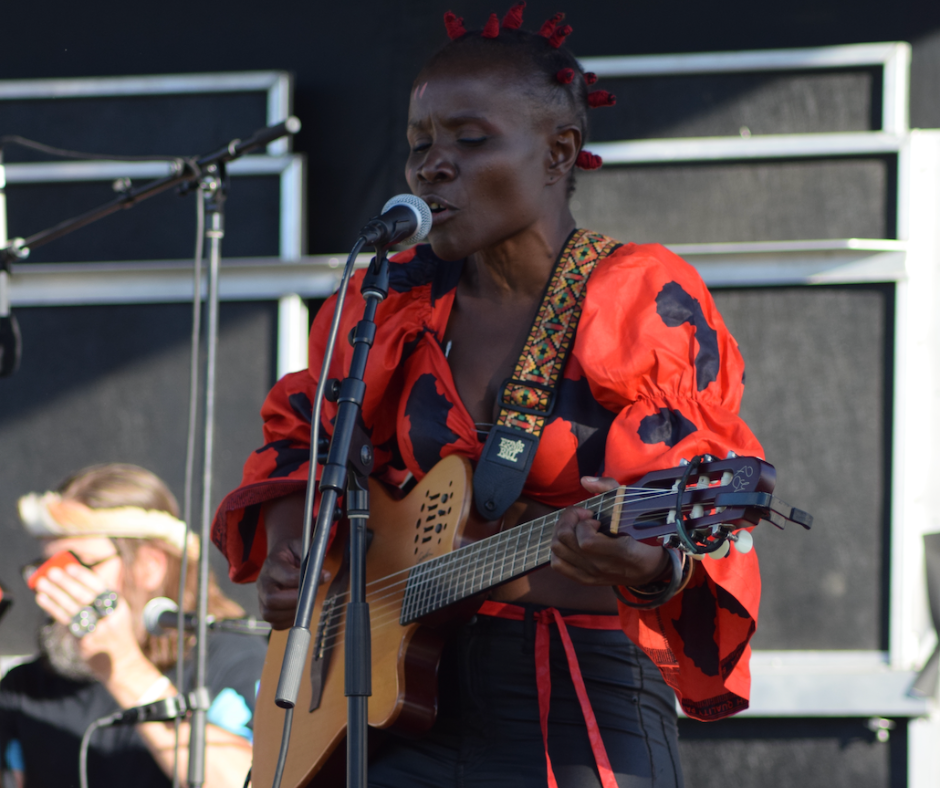
One of the winning tracks from our recent eco-anthem music competition is “The Wise Goat,” a song inspired by a Zambian story once told by Theresa N’gambi’s grandmother. This tale has been reborn and brought to life by Echoes of Eden, a collective of artists from around the world.
Echoes of Eden’s rendition features lead vocals by Thersa N’gambi and Zara Madani, with backing vocals by Aaron English. The ensemble includes Rakae Jamil from Pakistan on sitar, Miguel Mateus from France on bass guitar, and Palestinian oud player Ghassan Birumi.
In this heartfelt conversation with Yasmin Dahnoun, Theresa reflects on how ancestral wisdom shapes her sound and message, artfully weaving together music, memory, and activism.
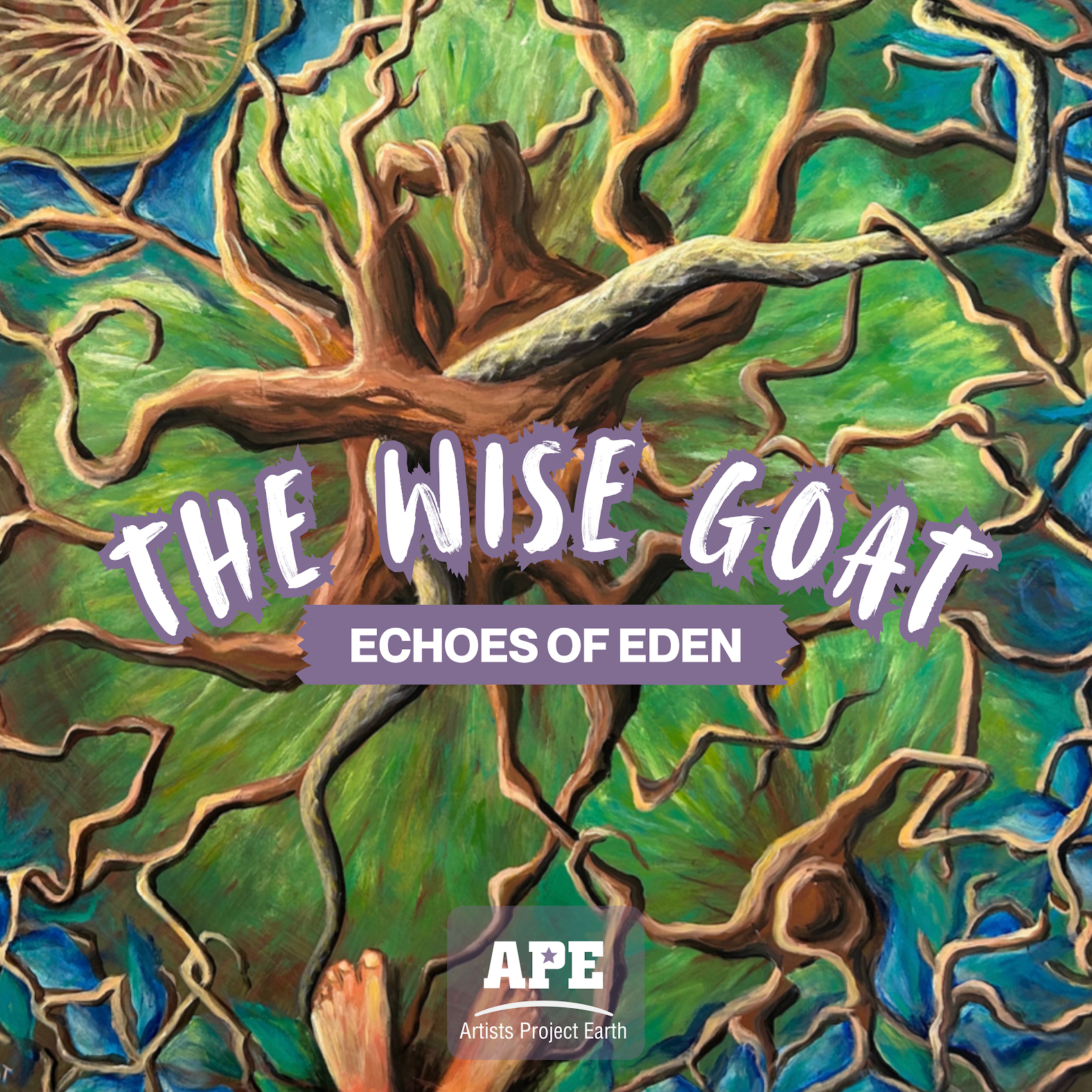
Please listen to, share, and download The Wise Goat here! All profits will be shared between Artists Project Earth and the talented artists involved, helping us continue to support both their incredible music and our charitable work.
INTERVIEW
Yasmin Dahnoun: Tell us more about yourself, your early influences, and how the story of the Wise Goat came to life.
Theresa Ng'ambi: I come from a family of artists. The women in my family were not only gifted musicians but also skilled in training initiates. They danced, sang, and played drums.
I grew up between two worlds: modernity and tradition.
My mother was a teacher, and during holidays we’d always return to the village. I was very close to my grandmother. She used to tell stories during harvest season, cooking pumpkins and corn that smelled so good under the moonlight. We’d gather around the fire, eating and listening to her sing and tell stories. I was one of her favourite grandchildren.
When she passed away, I felt a deep emptiness. I wanted to reconnect with her, bring her closer. That’s when I began singing songs that carried her stories. Music became therapy for my painful childhood. I carried that with me to school and eventually to college, where I studied music and music education. Though I didn’t resonate with how it was taught, it opened my eyes to other ways of understanding music.
Eventually, I went from audition to audition, attending workshops, learning what it meant to be a professional. I picked up the guitar and began to truly use my voice. But I had to unlearn so much. My question was: Why is music taught when it already lives inside us? I started teaching myself, playing repetitive sounds under a tree, which helped me find my voice.
I’ve travelled the world with my band, collaborated with artists across continents, won awards, and worked with women and children globally. That connection to my grandmother started it all.
When I sing, it must speak to me. Music is a service. Whether there's money or not, that’s secondary [laughs]. I’m terrible at the business side of it.
YD: Thank you for this beautiful background. I want to return to those moments with your grandmother, sitting by the fire. I can almost smell the spices, feel the warmth, the moonlight. Can you tell us more about her teachings and the wisdom she passed on to you?
TN: My grandmother was a gardener and deeply connected to the land. In Africa, we carry our history through oral tradition, not books. Grandmothers were our knowledge keepers.
She always had a story or a proverb ready, especially when we’d done something mischievous. One day, I uprooted her plants, and she told me the story of the pig and the Wise Goat. The goat was careful and preserved things for the future, whilst the pig would eat everything all at once. That stayed with me.
She taught me the value of preserving, whether it was food, knowledge, or stories. We’d go into the bush, collect wild vegetables, cook in big pots, and preserve them. Her stories were layered with wisdom. Today, I share that story with my children and other young people.
[The Wise Goat] teaches us to think of tomorrow. We’re having this conversation from different countries because of my grandmother’s story.
YD: I love that. There's something so alive in folk music, the stories, the teachings, the flavour. The Wise Goat project was a collective effort – Zara Madani singing from Pakistan, a Palestinian oud player, Arron English in the US, and artists from everywhere. How did it feel to hear your grandmother’s story transformed this way?
TN: It reminded me of the African setup – storytelling with call and response. The goat would sing, and others would respond. That communal spirit lived in this project. Hearing the Palestinian oud, the layers they added – it was stunning.
My grandmother’s house was always open. Not everyone I grew up with was blood family. That openness lives in me. Collaborating with artists from different cultures came naturally. I was amazed at what the project became. It turned into this theatrical, imaginary world where you sit with yourself in peace.
YD: You’re a musician, a designer, and an environmentalist. What motivates your creativity, and how do you weave all these threads together?
TN: What moves me most is what hurts me deeply. Seeing trees cut down crushes me. In Zambia, charcoal burning is rampant. It disrupts the weather, causes floods, and even kills. Children drown in floodwaters because of poor drainage.
I believe music is a powerful tool. A single line from a song can stay with you and spark change. I use music to talk about these issues.
I feel music is a powerful weapon that I can use to reach out to different audiences and communicate with my people about the things we’re affected by.
Nature inspires me. My mind runs like a jet [laughs]. My ancestors were West African merchants and healers. I feel connected to that history.
I wear natural fabrics, create my own clothes – like two baskets I turned into a bra. My look bridges the past and present. I want my image to speak even without words. People used to call me a witch. But I knew my vision. Now, slowly, people understand.
I’m also in love with language. It’s disappearing. I sing in many languages – Chewa, Nsenga, Bemba, Nyanja – because language carries spirit. When I sing in other languages, I imagine all those who have passed listening. When singing in Nsenga, I feel my mother and grandmother. In Chewa, I feel my father watching.
YD: I love how your ancestors are with you in your work. What would you say to musicians who carry a message but feel held back by a lack of time, resources, or support?
TN: Start with your phone. We live in a time where technology makes it easier. Use Instagram, TikTok, and Facebook. You don’t need to walk miles to reach a DJ anymore.
Passion first, money comes later [laughs].
When you love something and stay consistent, money finds you. I’ve collaborated many times without money, just exchanging skills. There are millions of possibilities.
YD: Thank you so much. You’ve shared so much wisdom – not just through your words, but through your life. As we close, is there anything more you’d like to share?
TN: Whatever you choose to do, just keep going. Let your challenges push you to another level. Love what you do, and it will love you back.