
Rala Tarabishi, when silence is louder than sound
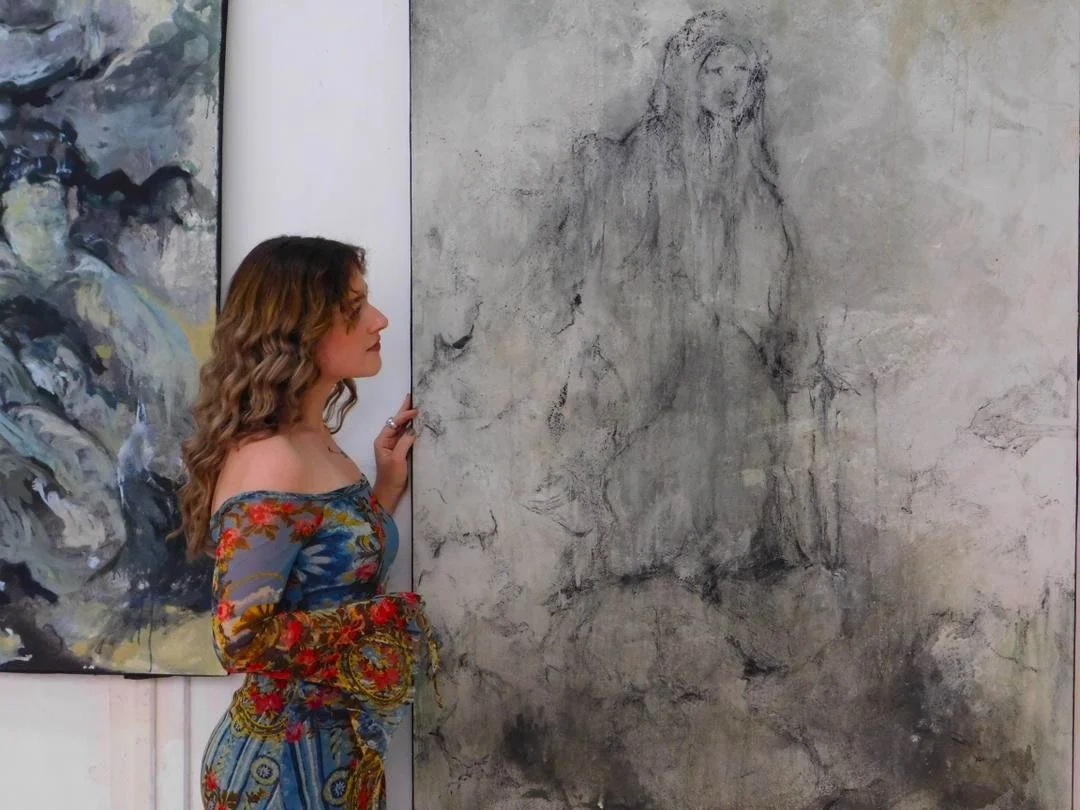
Damascus based Rala Tarabishi is an accomplished young artist working across oils, acrylics, watercolors and mixed media
Rebirth is the most recent artwork commissioned from Syrian artist Rala Tarabishi as part of APE’s Women Artists in Conflict Zones (#WACZ) curatorial initiative, which supports women artists living in or displaced from conflict-affected regions.
Having spent her entire life in Syria, a country shaped by both extraordinary cultural depth and prolonged war, Rala’s work carries the weight of memory, survival, and quiet strength. ‘I was from the fortunate few whose family wasn’t displaced during the war’, she reflects, yet safety is never absolute in a war-torn country. Even without displacement, the emotional landscape of conflict permeates daily life.
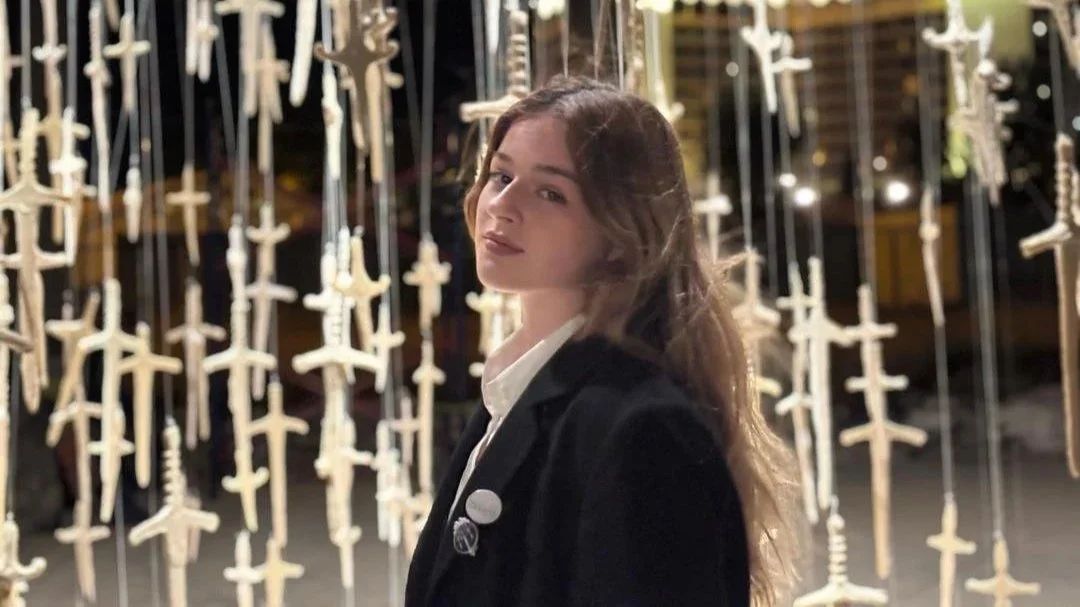
‘In a place where silence was often louder than sound, I chose to speak through colour, texture, and form’.
Damascus : City of Beauty and Devastation
‘My city is a city of contradictions, where beauty and devastation often coexist’, she explains. These contradictions form the emotional ground of her practice. To create art in Syria, she says, is to ‘wrestle with memory, identity, and survival on a daily basis’. Her paintings are not illustrations of war, but living testimonies shaped by womanhood, resilience, and the experience of remaining.
Her commissioned work Rebirth (2025) is a mixed-media painting on a 100 x 150 cm primed canvas. The scale invites closeness, drawing the viewer into an intimate emotional space. Rather than offering a single narrative, the work opens itself to reflection and recognition. ‘Through my pieces, I aim to make the invisible visible’, Rala says, ‘the soft collapse of a moment, the quiet triumph of healing, the fragility of feeling’.
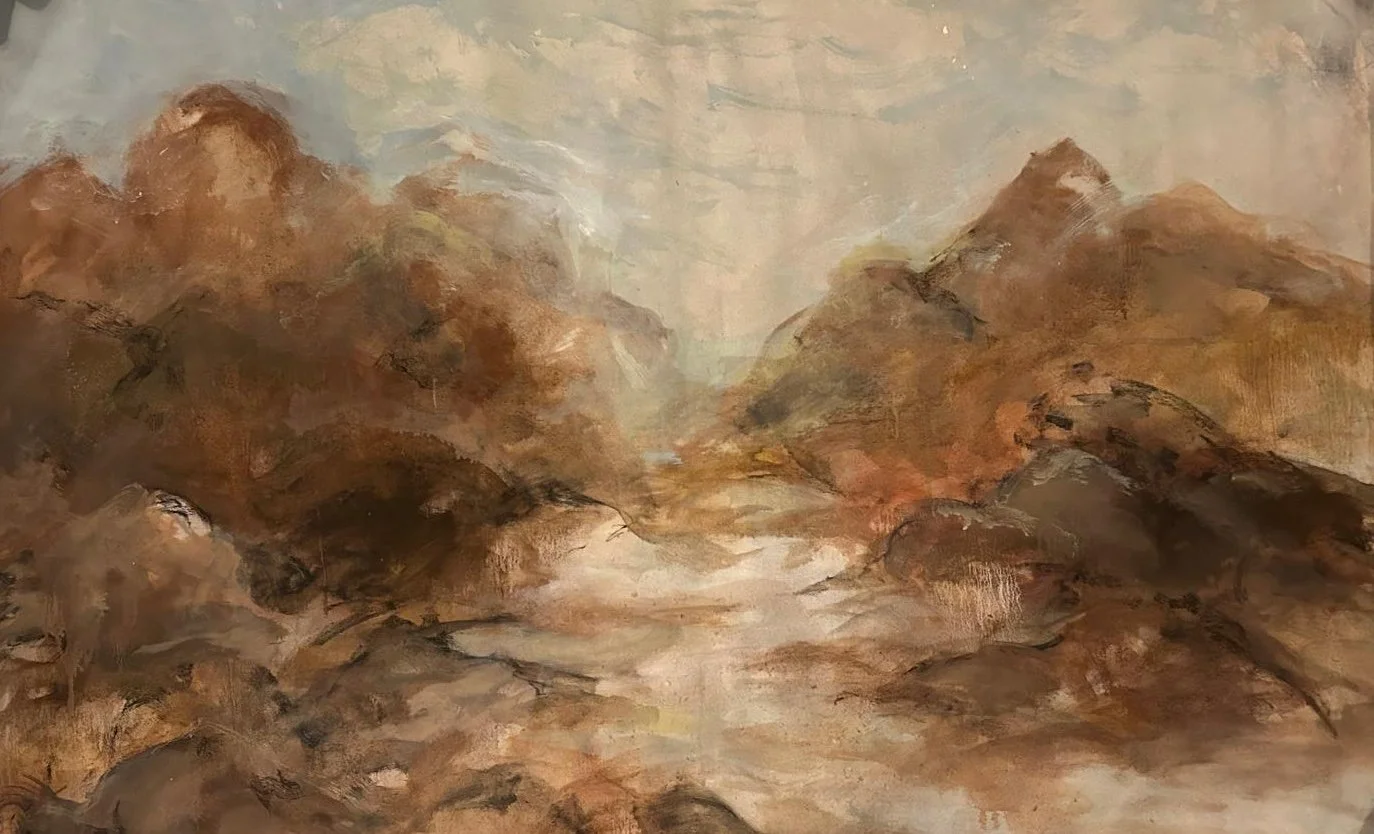
Rebirth speaks of transformation not as a dramatic event, but as a slow and ongoing process.
Nature as a Language of the Unspoken
Nature is central to Rala’s practice. It is not a background or a decorative element, but her chosen language. ‘I see it as a mirror for the unspoken parts of the human psyche – the grief we carry quietly, the hope we barely admit to, the joy that comes unexpectedly’.
In her work, natural forms become vessels for feeling. They hold sorrow without collapse and hope without denial. This connection allows her to explore emotional depth while remaining grounded in something larger than individual experience.
“Emotions, when processed through the lens of nature, become both universal and deeply personal’, she explains. Her hope is that viewers do not stand outside the work, but enter it. ‘I want them to see themselves reflected – not as spectators, but as participants in a shared emotional terrain’.
A Fluid Practice, A Living Process
Rala Tarabishi is an accomplished young Syrian artist working across oils, acrylics, watercolors and mixed media, allowing intuition to guide each piece. She does not commit to a single style or method. ‘My work transforms with the tides of my inner world,’ she says. Sometimes her process is careful and deliberate; at other times it is raw and chaotic.
This fluidity reflects her lived reality. When living in a territory shaped by constant conflict, adaptation is not only an artistic choice, but a necessity. ‘The diversity in my practice is a reflection of my need to remain fluid, to adapt, to survive – both as an artist and as a Syrian navigating constant change’.
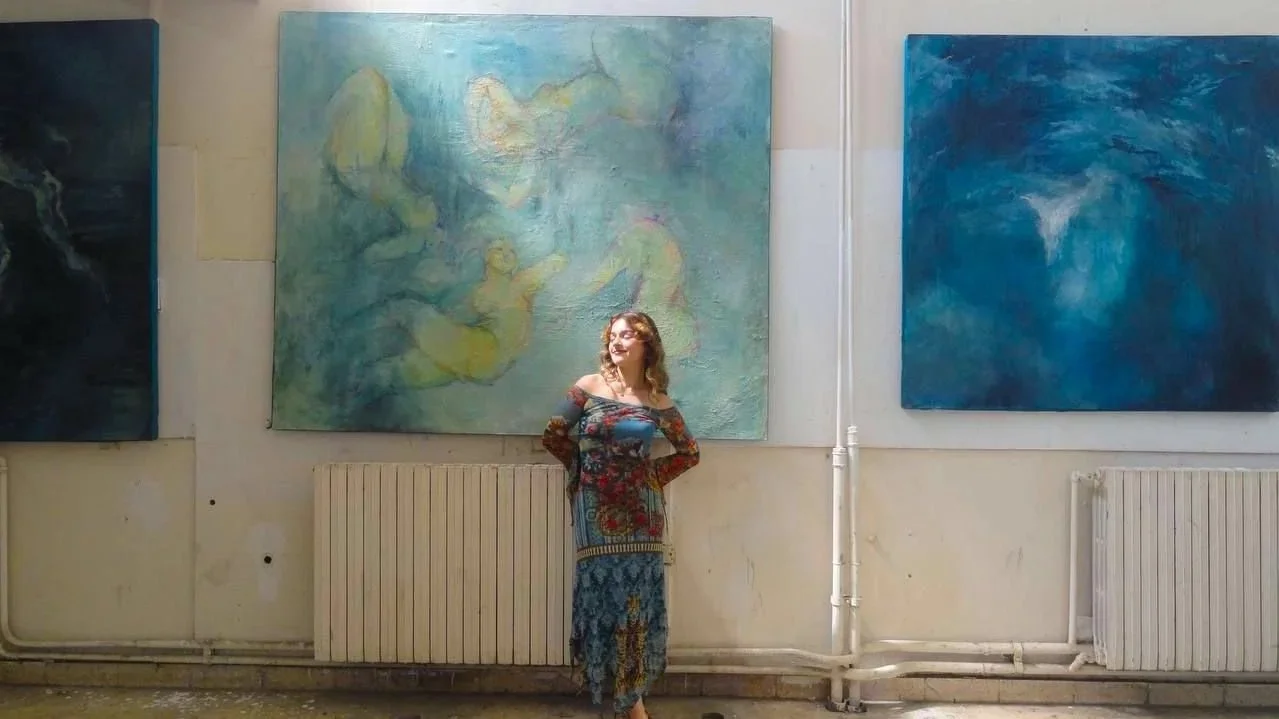
Rala’s art is a reminder that even in contexts shaped by war, creativity continues to flow, offering connection, reflection, and the possibility of becoming whole again.
Women Artists in Conflict Zones (#WACZ) curatorial initiative supports the artistic voices of women in conflict zones facing the immeasurable consequences of war in human lives and the living environment.
