
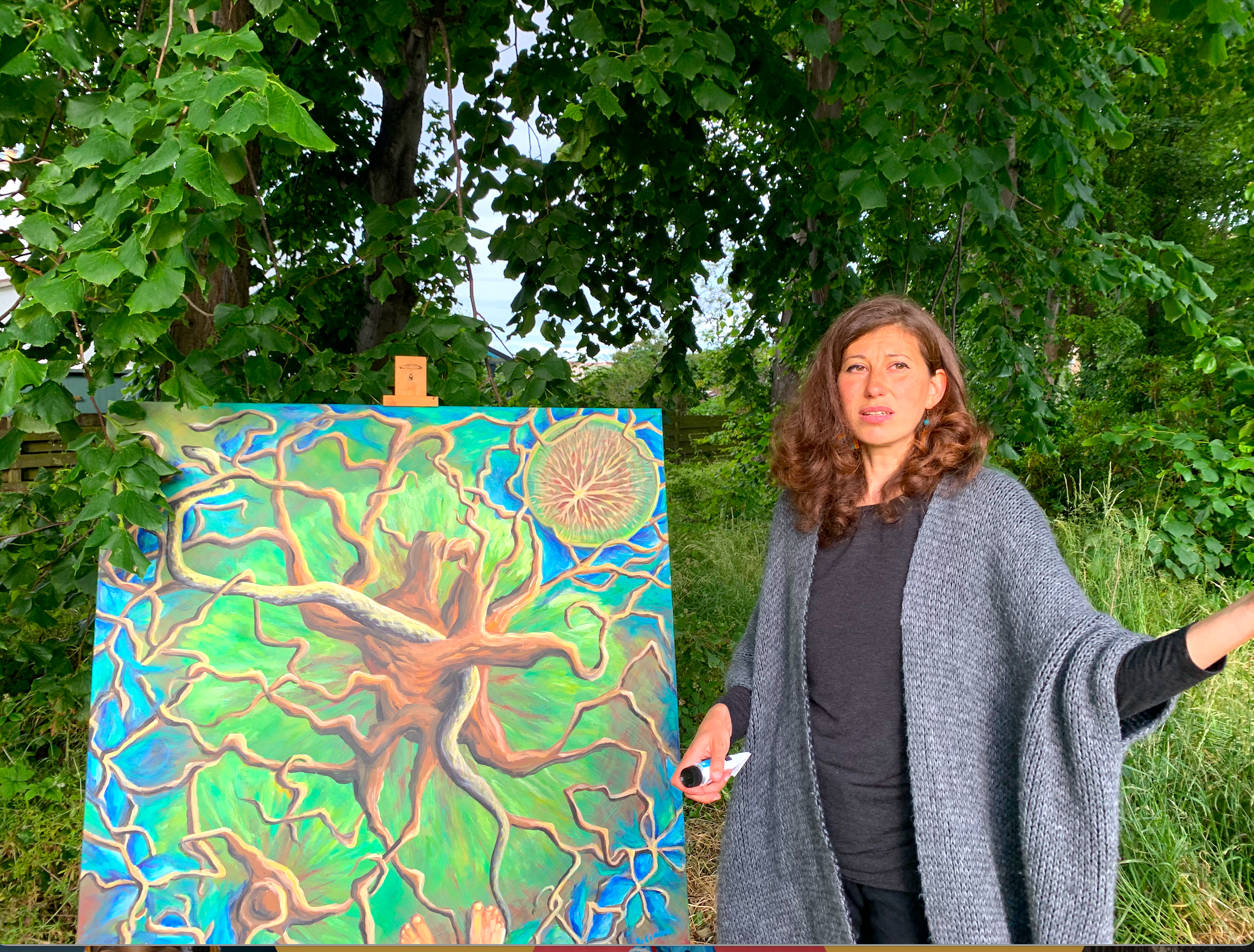
Tetiana Hurn
Zhmerynka, Ukraine
Tetiana Hurn is a Ukrainian visual artist and muralist whose practice explores the relationship between people, place, and the living world. Working across painting, large-scale murals, furniture, and public spaces, she has a natural affinity for scale, seeing walls, ceilings, floors, and entire environments as potential canvases.
Her creative process begins with close observation of her surroundings. For Tetiana, art has the capacity not only to alter the appearance of a place, but to transform how it is experienced. Public art becomes an imaginative language through which spaces can come alive, generate new feelings, and influence the communities that inhabit them.
As a Ukrainian artist whose life and work connect different countries, Tetiana also sees her practice as a bridge between cultures. She describes her purpose as strengthening relationships between Ukraine and the places to which she is personally connected, building connections grounded in respect, imagination, and shared humanity.
Following Russia’s full-scale invasion of Ukraine in 2022, Tetiana sought refuge in Scotland with her son. It was there, in the woodlands of North Berwick, that she created Spirit of the Forest for Artists Project Earth. The work brought together several strands of her practice—environment, movement, cultural connection, and the transformative potential of art—within a deeply personal experience of displacement.
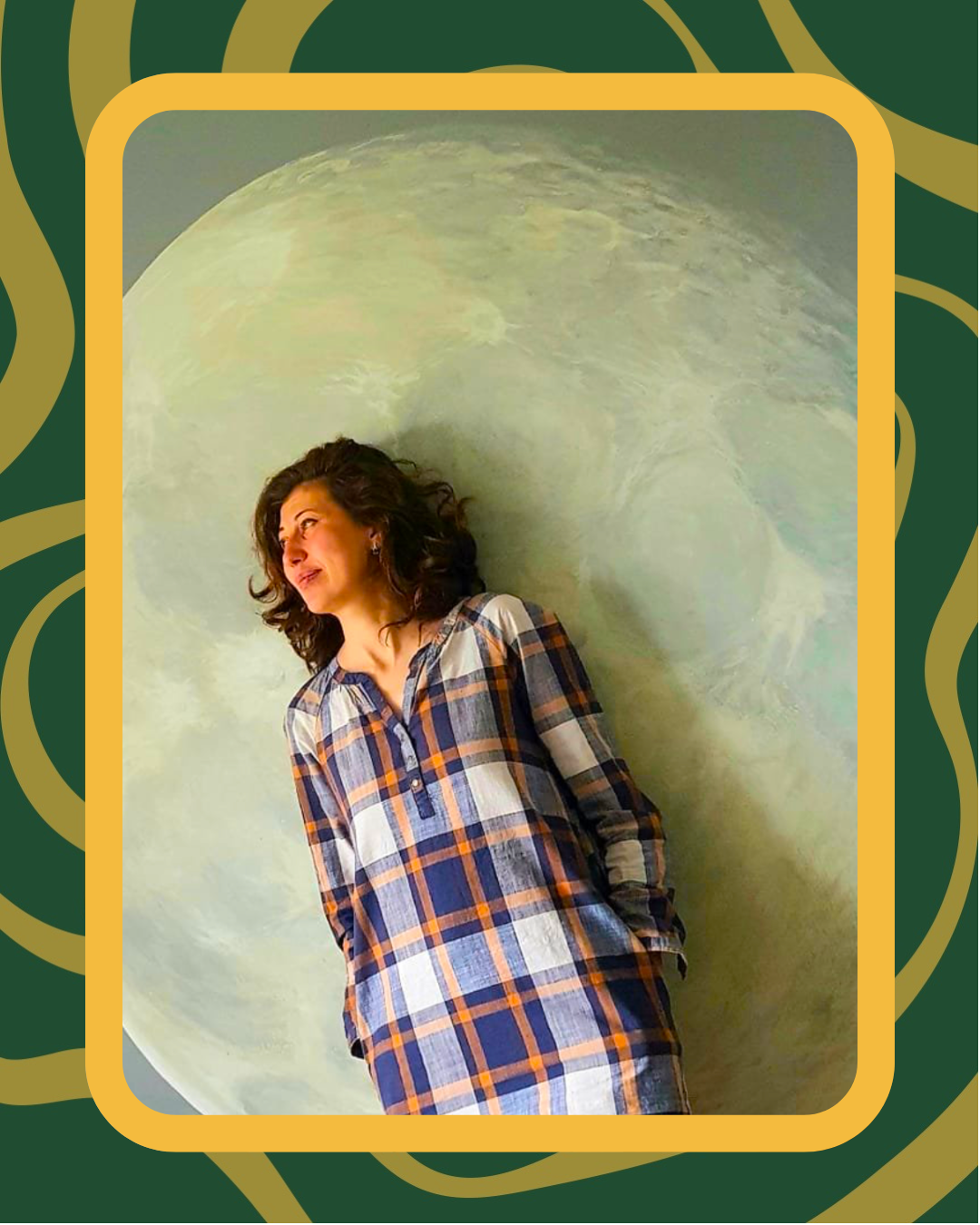
“My art in public is an aesthetic space that speaks to a society in the language of imagination and symbolism to create new thoughts and feelings.”
Tetiana Hurn

Spirit of the Forest
Mixed media on canvas
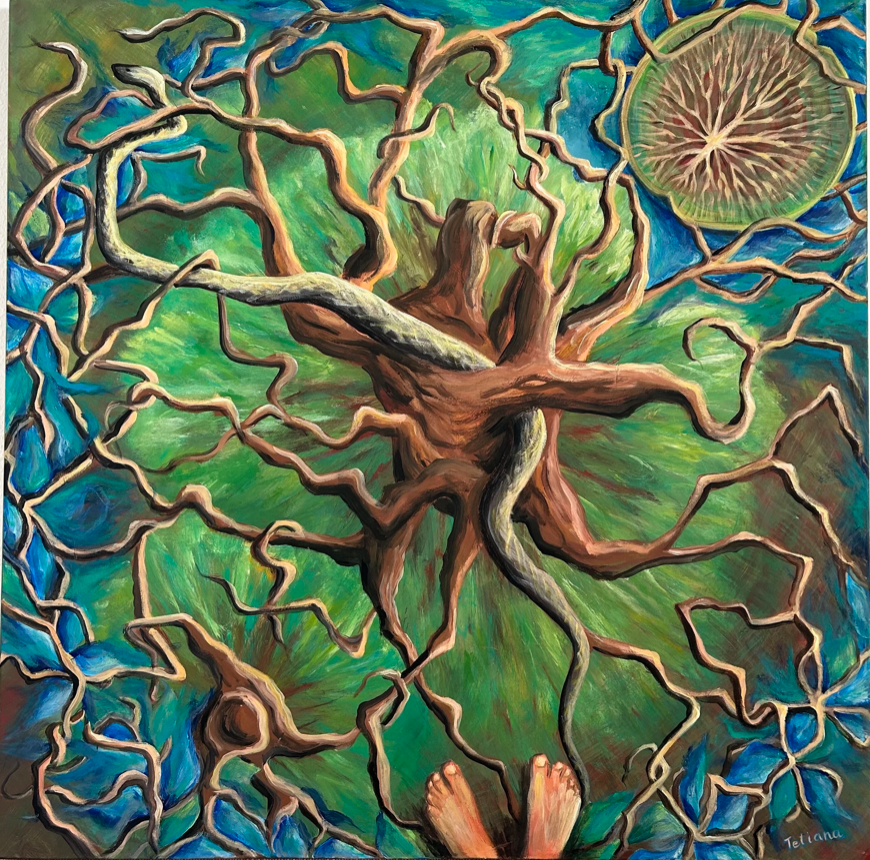
Spirit of the Forest emerged through direct engagement with the woodland landscape. Painted outdoors, the work allowed wind, shifting sunlight, insects, leaves, and the movements of Tetiana’s young son to become participants in its creation, dissolving the boundaries between artist, place, and ecosystem.
At its heart is an understanding of life as an interconnected system. Roots search for water; organisms grow, transform, and dissolve; human traces become part of a much larger ecology. Tetiana’s son’s footprints, incorporated into the work, extend this idea across generations and geographies—connecting a child born in South Africa, raised in Ukraine, and seeking refuge in Scotland with the imagined roots of the Amazonian forest.
As Tetiana explains:
“This subtle yet profound addition symbolises the interconnectedness of humanity within the grand cycle of life. It serves as a poignant reminder of the impact, positive or negative, significant or minute, powerful or feeble, that our actions on one side of the world can have on the other.”
Could you become the next caretaker of Spirit of the Forest?
This artwork carries a story of place, memory and imagination. At the close of the exhibition, it can begin another journey.
If you would like to become its next caretaker, we invite you to make an offer. Your contribution will support Artists Project Earth in commissioning artists and supporting creative, environmental and humanitarian action around the world.
Themes in Tetiana’s Work
Art as Transformation
From city walls to forest landscapes, arts transforms environments and how people experience, imagine and connect t with place.
Interconnectedness
Like interwoven roots and branches, people, cultures and ecosystems are part of the larger living whole, supporting and influencing one another across borders.
Art as a Cultural Bridge
Public art creates unexpected encounters across cultures, unleashing imagination and shared understanding
Zhmerynka: A City on the Move
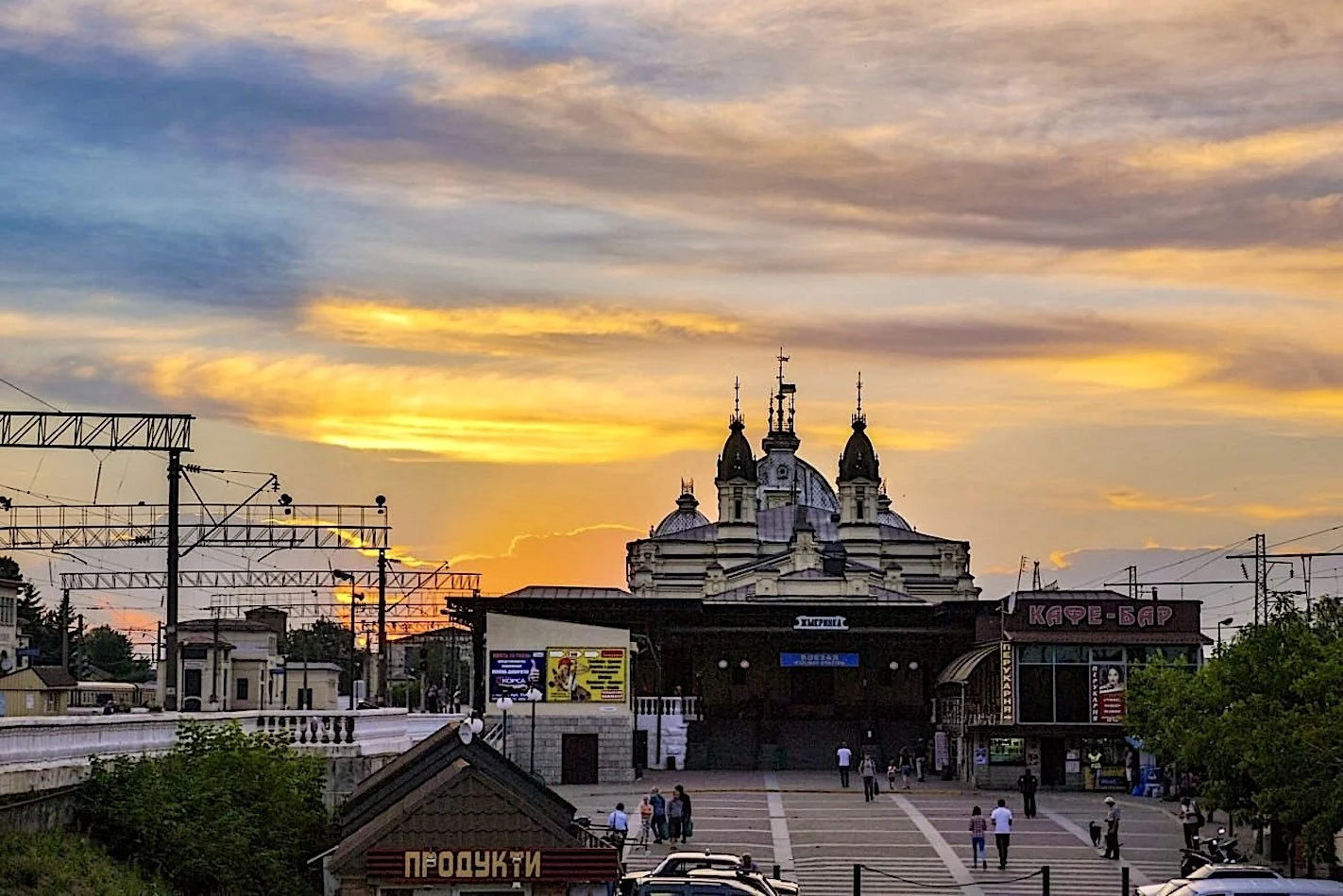
Located in Ukraine's Podolia region, Zhmerynka developed around one of Eastern Europe's most important railway junctions. For more than a century, its railways have connected communities while also making the city strategically vulnerable during successive wars.
Throughout its history, Zhmerynka has experienced repeated occupations, shifting political borders, and the devastation of the Holocaust. During Russia's full-scale invasion of Ukraine, its railway infrastructure once again became a military target, while simultaneously serving as a vital route for humanitarian aid, evacuation, and civilian movement.
The city's identity has therefore been shaped by movement: trains carrying people towards safety, uncertainty, separation, and return.
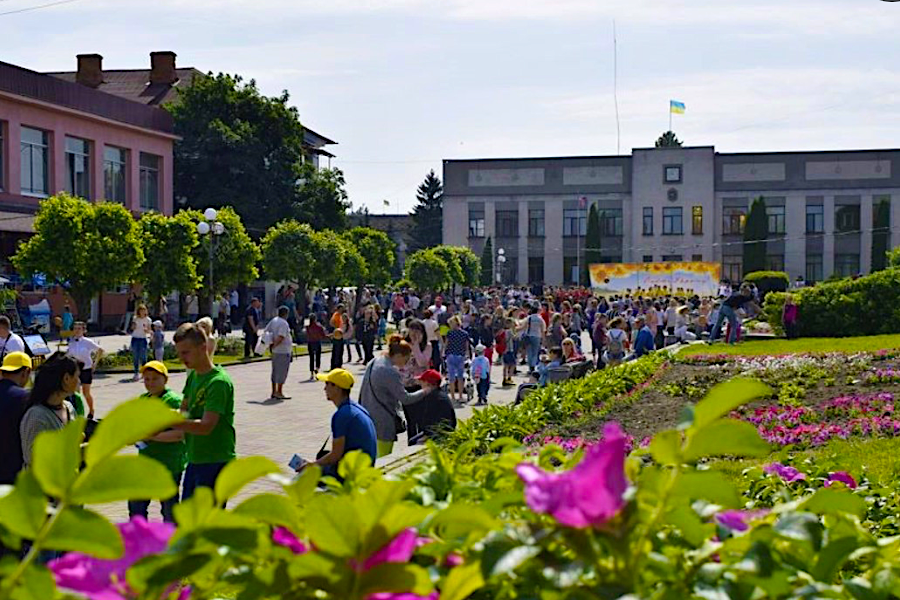
Although the current war began with Russia's full-scale invasion in 2022, it follows years of escalating conflict after the annexation of Crimea in 2014. For communities such as Zhmerynka, everyday life has become defined by uncertainty, blackouts, missile attacks on infrastructure, and continual adaptation.
Artists have responded not only by documenting destruction but by strengthening cultural identity, community resilience, and relationships with the living environment. Within this context, nature becomes more than refuge; it becomes a partner in healing and a reminder that life continues despite violence.
Living with War
Explore other artists
-
Khin Thethtar Latt
Yangon, Myanmar
-
Amna Elhassan
Khartoum, Sudan
-
Dania Bucko
Caracas, Venezuela
-
Amaal Saeed
Ahwaz, Iran
-
Rala Tarabishi
Damascus, Syria
-
Asmaa Alwhidy
Gaza, Palestine
-
Sarah Ndele
Kinshasa, Democratic Republic of the Congo